Your website is often the first real interaction a potential customer has with your business, and that first impression happens in seconds. A slow, cluttered, or non-responsive website can quietly cost businesses customers every single day, while a clean, fast, well-designed website builds trust before a visitor even reads a word of content. This is exactly why website design has moved from being a “nice to have” to a core business priority for companies of every size.
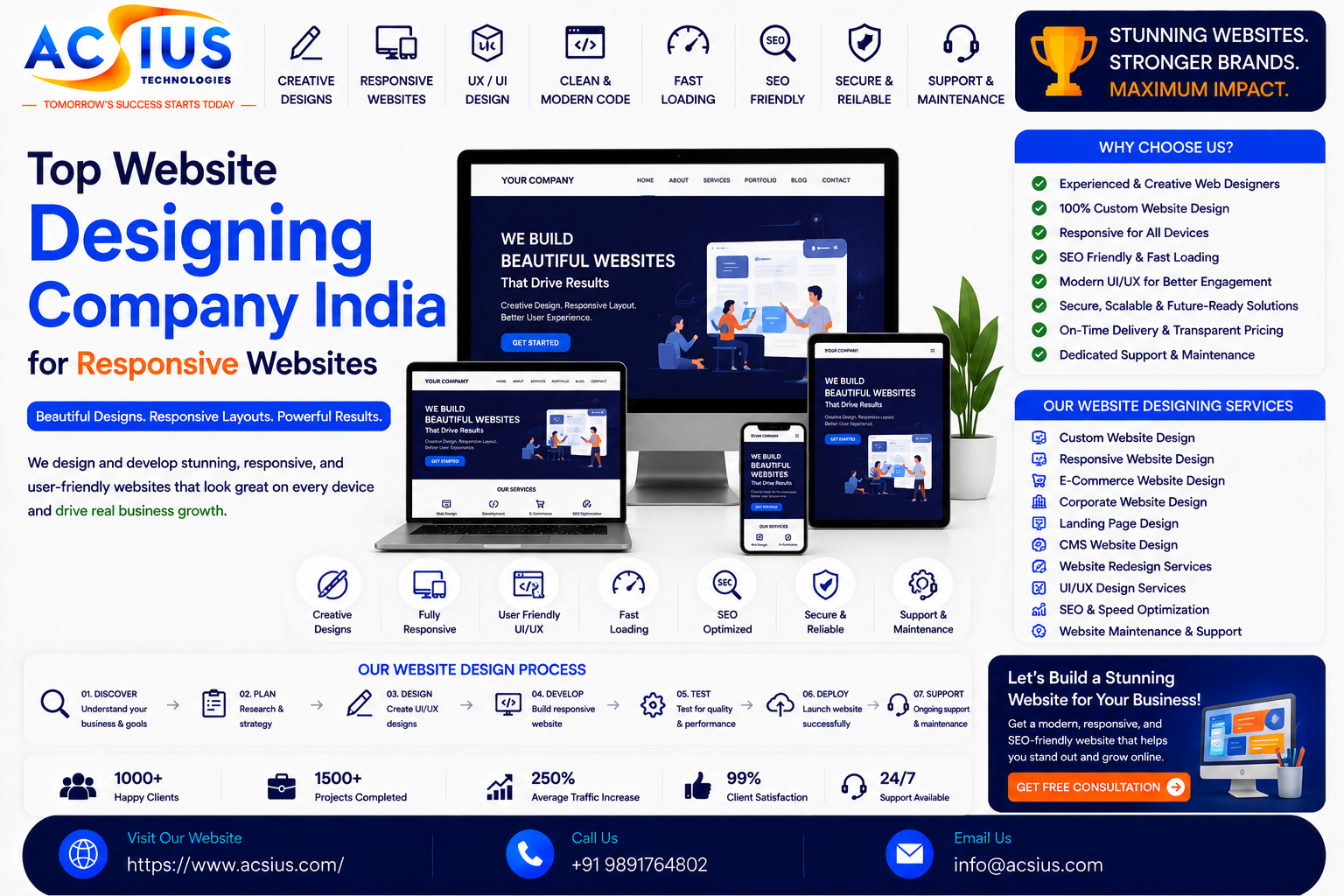
India has emerged as one of the world’s leading hubs for website design and development, combining strong technical talent with cost-effective pricing that makes high-quality design accessible to startups and enterprises alike. Businesses looking for a reliable, experienced partner increasingly search for a Website Designing Company India that understands both the technical and creative sides of building a website that actually converts visitors into customers.
Beyond the core website itself, many businesses run their site on WordPress because of its flexibility, ease of content management, and enormous plugin ecosystem. For this reason, finding a specialized WordPress Design Company in India has become a common part of the search process, particularly for businesses that want a website their internal team can update and manage without needing a developer for every small change.
And design doesn’t stop at layout and code. A website’s visual identity — its logos, icons, banners, and overall brand consistency — plays a major role in how professional and trustworthy a business appears online. This is why many companies also look to partner with a skilled graphic design company india to make sure their website’s visuals are as polished as its functionality.
In this post, we’ll explore why responsive design has become non-negotiable, what separates a top website design company from an average one, and how WordPress development and graphic design work together to create a complete, professional online presence.
Why Responsive Design Is No Longer Optional
A few years ago, “responsive design” was a selling point. Today, it’s the baseline expectation. Here’s why it matters more than ever.
-
Mobile Traffic Now Dominates
The majority of web traffic across most industries now comes from mobile devices. A website that isn’t optimized for smaller screens risks frustrating the majority of its visitors before they even see what the business offers.
-
Google Prioritizes Mobile-First Indexing
Search engines now primarily use the mobile version of a website’s content for ranking and indexing. A site that isn’t properly responsive can face real search engine visibility problems, regardless of how good the desktop version looks.
-
User Experience Directly Affects Conversions
Visitors who struggle to navigate a poorly optimized site — zooming in to read text, dealing with broken layouts, or fighting unresponsive buttons — simply leave. Responsive design keeps the experience smooth across phones, tablets, and desktops, which directly impacts how many visitors turn into customers.
-
One Website, Every Device
Rather than maintaining separate mobile and desktop versions of a site, responsive design uses flexible layouts, images, and grids that automatically adjust to fit any screen size, reducing long-term maintenance and update complexity.
-
Page Speed and Performance
Responsive websites, when built properly, are also typically optimized for faster load times, since good responsive frameworks avoid loading unnecessary heavy assets on smaller devices — another factor that directly affects both user experience and search rankings.
Popular Website Design Services Businesses Are Searching For
When businesses look for a website design partner, a handful of specific services come up again and again:
- Business and corporate website design for establishing credibility and providing key information
- E-commerce website design with product catalogs, shopping carts, and secure checkout flows
- Landing page design for marketing campaigns and lead generation
- WordPress website design and development for content-managed, easily updatable sites
- Website redesign services for businesses with outdated or underperforming sites
- UI/UX design focused on usability, navigation, and conversion optimization
- Website maintenance and support for ongoing updates, security patches, and content changes
- Branding and graphic design covering logos, banners, and visual identity elements
Each of these services requires a slightly different skill set, which is why businesses generally look for a design partner capable of handling the full picture rather than piecing together multiple disconnected freelancers.
What Separates a Top Website Design Company from an Average One
Plenty of agencies claim to build “professional” websites, but a handful of specific qualities separate genuinely strong design partners from the rest.
Strategic Design, Not Just Visual Design
A top design company doesn’t just make things look nice — it designs with conversion goals, user behavior, and business objectives in mind. Every layout decision should support what the business is actually trying to achieve.
True Responsiveness Across Devices
Beyond simply “not breaking” on mobile, truly responsive design considers touch interactions, mobile navigation patterns, and content prioritization for smaller screens, rather than just shrinking a desktop layout.
Fast Loading, Optimized Code
Experienced designers and developers optimize images, minimize unnecessary scripts, and follow clean coding practices to keep websites fast — something that matters both for user experience and search engine rankings.
SEO-Friendly Foundations
Good website design considers on-page SEO fundamentals from the start — proper heading structure, clean URLs, alt text for images, and fast load times — rather than treating SEO as an afterthought.
Content Management Flexibility
Especially for businesses using WordPress, a well-built site should allow the internal team to update text, images, and blog content easily, without needing a developer for routine changes.
Ongoing Support and Maintenance
Websites aren’t “set and forget” — they need regular updates, security patches, and occasional design refreshes as a business evolves. A strong design partner offers this as part of an ongoing relationship, not just a one-time project.
Why WordPress Remains a Top Choice for Businesses
WordPress powers a significant share of websites globally, and for good reason. It offers an appealing combination of flexibility, ease of use, and a massive plugin ecosystem that can extend a site’s functionality without custom development for every feature.
Benefits of WordPress for Business Websites
- Easy content management — Business teams can update pages, publish blog posts, and manage media without touching code
- Extensive plugin ecosystem — From SEO tools to e-commerce functionality to booking systems, most common features already have a reliable plugin
- Customizable themes — Designers can build fully custom themes or customize existing ones to match brand requirements
- Strong community support — A large global community means faster troubleshooting, more documentation, and continuous security updates
- SEO-friendly structure — WordPress’s clean code structure and available SEO plugins make it easier to build search-optimized websites
Because WordPress is so widely used, it’s also a common target for security vulnerabilities if not properly maintained, which is exactly why working with an experienced WordPress design partner — rather than a generic website builder — matters for long-term site health and security.
Where Graphic Design Fits Into the Bigger Picture
A website’s code and layout can be flawless, but without strong visual design, the site can still feel generic or untrustworthy. Graphic design covers the elements that shape a business’s visual identity and directly influence first impressions.
Key Graphic Design Elements for Websites
- Logo design that establishes brand recognition
- Icon sets that improve navigation clarity and visual consistency
- Banner and hero image design for landing pages and campaigns
- Infographics that simplify complex information for visitors
- Brand guidelines ensuring consistent colors, fonts, and imagery across the site and marketing materials
- Social media graphics that extend the website’s visual identity across other platforms
A cohesive visual identity across a website and its supporting marketing materials builds trust and recognition over time, which is why many businesses prefer working with a single team that can handle both the website’s code and its visual design rather than managing separate vendors for each.
How to Evaluate a Website Design Company Before Hiring
-
Portfolio Relevance
Look for previous projects in a similar industry or with similar functionality requirements to what you need.
-
Responsive Design Examples
Test their previous work on an actual mobile device, not just a screenshot, to confirm genuine responsiveness.
-
Page Speed of Their Own Work
Check the loading speed of websites they’ve previously built — this is one of the clearest indicators of technical quality.
-
Communication and Process
Understand how they handle revisions, feedback, and project timelines before committing to an engagement.
-
Post-Launch Support
Confirm what ongoing maintenance, security updates, and support look like after the website goes live.
-
Combined Design and Development Capability
Consider whether they can handle graphic design, WordPress development, and general website design under one roof, which reduces coordination overhead significantly.
Final Thoughts
A responsive, well-designed website has become a fundamental requirement for businesses that want to build trust and convert visitors into customers, not a luxury reserved for large enterprises. The right design partner brings together strategic layout decisions, genuine mobile responsiveness, clean WordPress development, and strong visual design into one cohesive online presence.
Rather than piecing together separate vendors for web design, WordPress development, and graphic design, working with a single experienced team ensures your website’s technical performance and visual identity are aligned from day one.
ACSIUS works with businesses looking to build exactly this kind of complete, professional online presence — combining responsive website design with specialized WordPress development and graphic design services, so you get a team that understands how every visual and technical element of your website fits together rather than isolated vendors solving isolated problems.
FAQs
How long does it take to design and launch a responsive website?
Simple business websites can often be completed within a few weeks, while more complex projects involving e-commerce or custom functionality typically take longer, depending on scope and revision cycles.
Is WordPress a good choice for e-commerce websites?
Yes, especially when combined with WooCommerce, WordPress can support fully functional e-commerce sites with product catalogs, secure checkout, and inventory management.
What’s the difference between a template-based website and a custom-designed one?
Template-based websites use pre-built layouts that are faster and cheaper to launch but offer less flexibility, while custom-designed websites are built specifically around a business's brand and functional needs, offering more differentiation and flexibility long-term.
Do I need separate graphic design and web design services, or can one company handle both?
Many experienced design companies handle both under one engagement, which typically results in a more visually cohesive website since the same team manages both the layout and the brand visuals.
How important is page speed for website design?
Very important — slow-loading websites lead to higher bounce rates and can negatively affect search engine rankings, making speed optimization a core part of good website design rather than an optional extra.
Can an existing outdated website be redesigned instead of rebuilt from scratch?
In many cases, yes. An experienced design company can assess the existing site's structure and content to determine whether a redesign or full rebuild makes more sense.
What ongoing maintenance does a website need after launch?
Websites typically need regular security updates, plugin updates (especially for WordPress sites), content updates, and occasional design refreshes to stay current and secure.
Why do businesses specifically look for design companies in India?
India offers a strong combination of technical talent, design experience, and competitive pricing, making it an attractive option for businesses looking for high-quality work without the higher costs often associated with agencies in other regions.
Should my website be built with SEO in mind from the start?
Yes. Building SEO fundamentals into the website's structure, code, and content from the beginning is far more effective than trying to retrofit SEO improvements onto a site after launch.