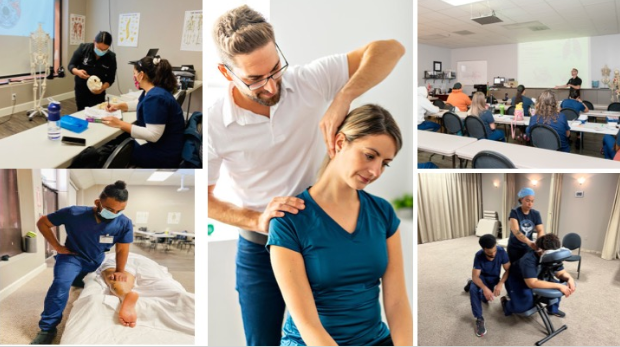
When someone types “massage schools near me” into a search engine, they’re often not just looking for general training — they want to explore the specialty services and massage modalities that make a school truly stand out. Whether your goal is to work in a spa, a clinic, or a medical-wellness setting, knowing what you can learn during your massage education is crucial. Institutions like AMTT San Antonio or the massage schools near me in San Antonio offer rich curricula covering a wide spectrum of modalities, preparing students for diverse career paths.
What Does “Modality” Mean in Massage Training?
In the context of massage therapy education, a modality refers to a specific style, technique, or therapeutic approach used during a session. These are the “tools” in a therapist’s toolkit — each suited for different client needs. At any given massage school, students typically learn a blend of foundational and advanced modalities so they can tailor treatments to varied client profiles.
Core Modalities Taught at Massage Schools Near Me
Swedish Massage
Almost all massage schools — including ones like AMTT San Antonio — begin with the Swedish modality. Swedish massage uses long, gliding strokes (effleurage), kneading (petrissage), and tapping (tapotement) to promote relaxation and improve circulation.
It’s the bedrock of many other techniques and helps students build good palpation skills and body mechanics.
Deep Tissue Massage
Deep tissue massage focuses on the deeper layers of muscle and connective tissue, using slower strokes and more purposeful pressure to address chronic tension and pain.
Therapists learn how to engage muscles more profoundly without causing discomfort or injury.
Trigger Point Therapy
Trigger point therapy involves applying sustained pressure to small, tight “knots” in muscle tissue, then releasing them in cycles.
This technique is effective for very specific pain and mobility issues, making it a valuable skill for clinical massage settings.
Sports Massage
Many massage schools integrate sports massage into their curriculum. This modality is tailored for athletes and physically active individuals, combining traditional massage strokes with injury assessment, muscle recovery, and stretching protocols.
Students learn how to deal with overuse injuries, to enhance performance, and to design post-event recovery sessions.
Myofascial Release
Myofascial release is a gentle but powerful modality that targets the fascia — the connective tissue enveloping muscles, bones, and organs.
In training, students are taught to apply sustained pressure and stretching to release fascial restrictions, improve flexibility, and reduce pain.
Chair Massage
For more accessible or workplace-based massage services, chair massage is commonly taught.
Therapists learn how to work on a seated client, focusing on key tension areas like the back, shoulders, and neck.
Hot Stone Massage
Hot stone massage uses warmed stones (usually basalt) placed on the body or used to massage muscles, providing heat and weight that help relax tension.
This adds a soothing, spa-like feel to treatments and teaches students how to integrate thermal elements safely.
Hydrotherapy
Hydrotherapy, or water-based modalities, can also be part of a massage school’s training. Students are exposed to techniques like hot and cold packs, steam, and wraps.
These methods help therapists understand the physiological effects of temperature on tissues and how to combine them with massage.
Advanced & Clinical Modalities
Neuromuscular Therapy
Some massage programs go beyond spa-style therapies into neuromuscular therapy (NMT). Students learn techniques like deep transverse friction, PNF stretching, and trigger point work grounded in neuromuscular science.
This modality is especially useful in rehabilitative or medical massage settings.
Myofascial Release (Advanced)
While basic myofascial release is common, advanced programs dive deeper into the neuromuscular relationship in fascia, assessing posture, and using somatic techniques to resolve chronic tension.
Students may also learn how fascial dysfunction contributes to musculoskeletal imbalances.
Medical Massage & Injury Rehabilitation
Some schools teach medical massage techniques that align with physical rehabilitation. Using structured assessments, therapists learn to tailor massage sessions for post-surgical patients, injury recovery, and pain management.
These courses emphasize a therapeutic approach to bodywork.
Prenatal Massage
Therapeutic massage schools may offer prenatal massage training. Students learn safe positioning, contraindications, and gentle techniques to accommodate pregnant clients.
This modality is highly valuable for those who want to support the wellness of expectant mothers.
Reflexology & Energy Work
Many massage therapy programs include reflexology, where students apply pressure to reflex points on the feet, hands, or ears believed to correspond to other parts of the body.
Some schools also incorporate energy-based or eastern philosophies — blending both touch and subtle energy work.
Why These Specialty Modalities Matter for Your Training
Learning a variety of modalities gives student therapists a versatile skill set. It doesn’t just make them competent — it makes them competitive. At places like AMTT San Antonio, students can go beyond fundamentals into mastery-level training, including deep tissue, spa therapies, and clinical services.
By being trained in both relaxing and rehabilitation-focused approaches, graduates can serve a wider range of clients from spa-goers to athletes to individuals recovering from injury.
How to Explore Modality Options When Researching Massage Schools Near Me
If you are searching for “massage schools near me” or specifically looking at the School of Massage San Antonio or AMTT San Antonio, here are a few tips:
- Ask for a curriculum breakdown: Request details of the modalities taught and how much hands-on practice you’ll get in each.
- Try to attend an open house or demo class: Observe how instructors teach different modalities and how much lab work students get.
- Speak with current students or graduates: They can provide insight into which modalities they felt confident in after graduation.
- Check the program structure: Some schools offer advanced clinical hours to deepen your training in specialty services.
Conclusion
Choosing a massage school based on “massage schools near me” means more than proximity it means evaluating which specialty services and modalities you will learn. Whether you join the School of Massage San Antonio, enroll at AMTT San Antonio, or explore another local institute, make sure their curriculum includes a variety of modalities: from Swedish, deep tissue, and trigger point therapy, to advanced neuromuscular work, hot stone, hydrotherapy, and prenatal massage. When all is considered, you’ll be on your way to becoming a skilled and adaptive professional in the school of massage therapy. These techniques will equip you to serve a broad client base, refine your hands-on confidence, and build a successful career.